

Top 5 Running Injuries We Treat at Our Kitsilano Sports Physiotherapy Clinic
Running is one of the most popular ways to stay active in Vancouver, and for good reason. Between the seawall, Jericho Beach trails, and the quiet streets of Kitsilano, there’s no shortage of great places to log your kilometres. But with all that mileage comes the very real risk of injury.
If you’re dealing with knee pain, heel soreness, or a shin that won’t quit, sports physiotherapy can help you figure out what’s going on and get you moving again.Research shows that up to 50% of regular runners report more than one injury per year, and most of those injuries are caused by overuse rather than a single accident. The good news? Most running injuries respond well to sports therapy treatment, especially when you catch them early.
Here are the five most common running injuries our team focused on sports physio sees in Kitsilano, and what you can do about them.
1.Runner’s Knee (Patellofemoral Pain Syndrome) One of the Top Sports Physiotherapy Presentations
Runner’s knee (formally known as patellofemoral pain syndrome, or PFPS) is a dull, aching pain felt at the front of or just behind the kneecap. It tends to flare up during runs, going down stairs, or after sitting for long stretches with your knees bent. PFPS is the most prevalent running-related injury, with a reported prevalence of 19–30% in female runners and 13–25% in male runners.
The underlying cause is usually a tracking issue with the kneecap, combined with weakness in the hips, glutes, or quadriceps. Your kneecap is supposed to glide smoothly in its groove, but when the muscles around it aren’t pulling their weight, it can shift slightly and create friction with every stride.
How Sports Therapy Helps
A thorough assessment looks at how your knee tracks during movement, the strength of your hip stabilizers, and any restrictions in your ankle or foot that may be changing your running mechanics. Treatment typically combines hands-on manual therapy, targeted strengthening exercises, and gait retraining – all tailored to your body and your training load.
2. IT Band Syndrome: A Common Sports Rehab Case for Runners
Iliotibial band syndrome is the most common cause of lateral knee pain in runners. It results from repetitive friction of the IT band over the lateral femoral epicondyle, with a maximal zone of impingement occurring at roughly 30 degrees of knee flexion.
If you feel a sharp ache on the outside of your knee that comes on during longer runs or downhill stretches, IT band syndrome could be the culprit. It’s especially common among distance runners, and Vancouver’s hilly terrain doesn’t help.
The root cause is often not the band itself. Weakness or inhibition of the lateral gluteal muscles is a recognized contributing factor when these muscles don’t fire properly during the support phase of running, the pelvis loses stability, and other structures compensate, creating soft tissue tightness and myofascial restrictions.
What Sports Physio Treatment Looks Like
Your physio will assess your hip strength, glute function, and overall movement patterns rather than focusing only on the painful spot. Treatment usually includes soft tissue work, foam rolling education, hip and core strengthening, and running form assessment. The goal is to fix the underlying imbalance so the issue doesn’t keep coming back each time you ramp up mileage.
3. Shin Splints: A Sports Physio Staple for New and Returning Runners
Understanding Medial Tibial Stress Syndrome
Shin splints (or medial tibial stress syndrome (MTSS)) cause pain along the inner edge of the shinbone. They’re extremely common in runners who’ve recently increased their mileage or training intensity too quickly, and in athletes returning to running after a break. MTSS accounts for 6–16% of all running injuries and up to 50% of all lower leg injuries.
The pain often starts during a run, eases off mid-session, then returns afterward. Left untreated, it can progress to a more serious stress reaction or even a stress fracture, so it’s worth getting checked out sooner rather than later.
Contributing factors include poor footwear, hard running surfaces, flat feet or overpronation, and muscular imbalances at the ankle and calf. Your physio can rule out more serious conditions like stress fractures, then work through soft tissue release, activity modification, a strengthening program for the calves and foot muscles, and gait retraining. A graded return-to-running plan is part of the process too, so you rebuild safely rather than cycling back into the same pain pattern.
4. Achilles Tendinopathy: A Key Focus in Athletic Physiotherapy
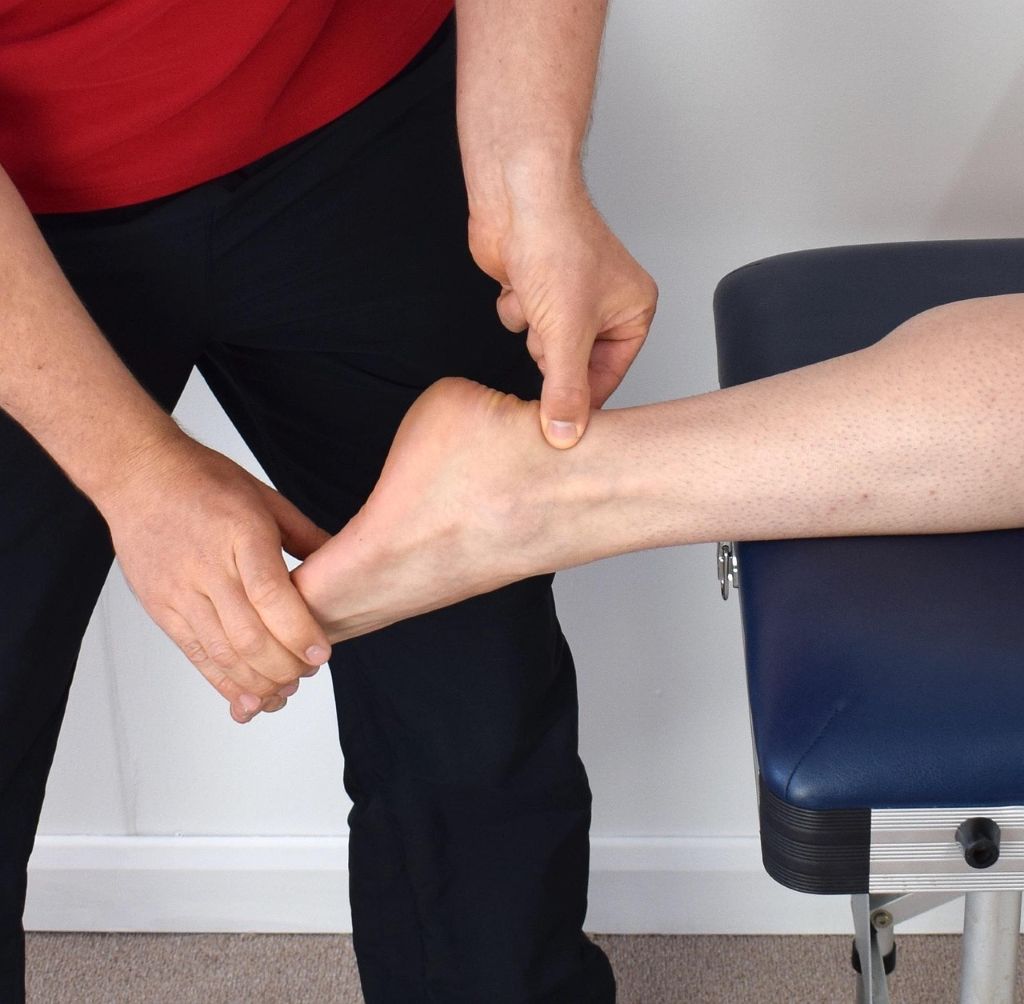
Achilles tendinopathy is one of those injuries that runners tend to push through for far too long. It usually shows up as stiffness or pain at the back of the heel, most noticeable first thing in the morning or in the early minutes of a run. Achilles tendonitis accounts for over 10% of all running injuries and is common in anyone who has recently started or increased their activity.
The condition develops when the calf complex is either too weak or too tight, placing excessive load on the tendon. It can also be driven by poor foot biomechanics or a sudden spike in training volume. The tricky part is that Achilles tendinopathy is a progressive condition; it doesn’t tend to resolve on its own if you keep loading it the same way.
Athlete Physiotherapy Approach
Treatment for Achilles tendinopathy centres on eccentric heel-lowering exercises. Your physio will also use hands-on soft tissue work, load management strategies, and footwear recommendations to support recovery. Orthotics or taping may be part of the plan depending on your foot mechanics. The key is gradually rebuilding tendon strength and capacity rather than resting completely, which can actually slow healing.
5. Plantar Fasciitis: Athlete Care That Goes Beyond Heel Pain
Plantar fasciitis is a frustratingly common complaint, especially for runners who’ve recently upped their training or changed their shoes. It causes sharp, stabbing pain in the heel or arch of the foot and is usually worst with those first few steps in the morning or after sitting for a while.
The plantar fascia is a thick band of connective tissue that runs along the bottom of your foot, and when it’s under too much stress, it becomes irritated and inflamed.
Plantar fasciitis can be significantly improved with a combination of stretching, heel raises, and orthoses that provide arch support. Ignored, though, it has a tendency to become a chronic problem that takes months to resolve.
How Sports Therapy Gets You Back on Your Feet
At a sports physiotherapy assessment, your clinician will look at your foot mechanics, calf flexibility, arch support, and running gait to figure out why the plantar fascia is under load. Hands-on treatment, intrinsic foot strengthening, and guided stretching are the core of the program. Footwear changes and custom or off-the-shelf orthotics can also make a meaningful difference, particularly for runners with flat feet or high arches.
Why Seeing a Physiotherapist Who Commonly Treats Sports Injuries in Kitsilano Makes Sense
Most running injuries share a common thread: they’re driven by overuse, load management errors, and underlying biomechanical issues that don’t show up on a scan. Physiotherapy addresses the root causes rather than just treating symptoms, with recovery programs built around thorough assessment, manual therapy, and customized exercise rehabilitation.
Running with pain is not a strategy. Compensating around one injury often leads to a second one, and then a third. The runners who stay healthy over the long term are the ones who address issues early and take their rehab seriously.
Being based in Kitsilano means our patients are often active people — cyclists, paddlers, ocean swimmers, and runners who use the neighbourhood’s trails and paths year-round. A sports-focused physio who understands athletic demands can build a program around your goals, not just your symptoms.
Book Your Kitsilano Physiotherapist Appointment for Athletes Today
If you’re dealing with one of these injuries, or something else that’s been slowing you down, don’t wait it out. Getting an accurate diagnosis and a tailored plan early almost always means a faster recovery.
Book an appointment at our Kitsilano physiotherapy clinic and get back to doing what you love, whether that’s the Sunday long run, the weekly tempo, or just staying active and feeling good in your body. Your recovery starts with one appointment.